Homeowner Guide
•
5 min read
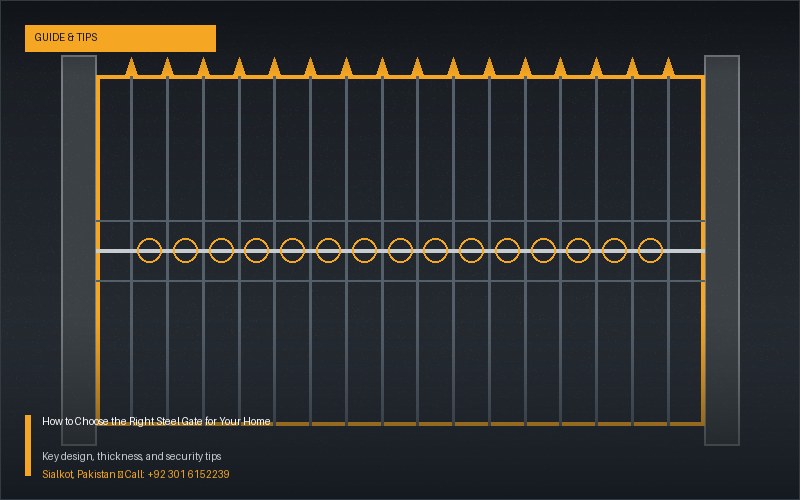
How to Choose the Right Steel Gate for Your Home
A main gate is your home's primary security barrier and its prominent architectural feature. When commissioning a steel gate in Sialkot, gauge thickness (14 vs 18 gauge) and hinge bearing capacity are paramount...
Key Factors for Sialkot Residences:
1. Steel Thickness: Beware of quotes proposing light 20 or 22-gauge sheet metal. For an entrance gate that won't buckle under strong winds or daily operation, demand 14-gauge or 16-gauge tubular frame sections.
2. Swing vs Sliding: If your driveway has an incline or limited clearance, a bottom-track or cantilever sliding gate saves valuable parking space compared to double-swing leaves.
3. Heavy-Duty Ball Bearing Hinges: Regular barrel hinges will sag over time. Heavy steel gates must be hung on adjustable heavy-duty ball-bearing grease hinges securely welded to reinforced concrete or steel post pillars.
Material Comparison
•
6 min read
Steel vs Aluminium: Understanding the Differences
Comparing structural weight, corrosion resistance, initial investment, and durability. Discover when mild steel is mandatory and when lightweight aluminium sections offer superior performance...
The Engineering Breakdown:
Tensile Strength: Mild steel is approximately 3 times stiffer and significantly stronger than aluminium. For load-bearing roof trusses, safety grills, and large boundary gates, steel is unbeatable.
Corrosion Resistance: Aluminium naturally forms a protective oxide layer and never rusts, making it the premier choice for exterior window frames, bathroom doors, and architectural louvers exposed to heavy rain.
Weight & Handling: Aluminium is roughly one-third the weight of steel, which makes sliding windows glide effortlessly with lower stress on rollers and bearings.
Design Inspiration
•
4 min read
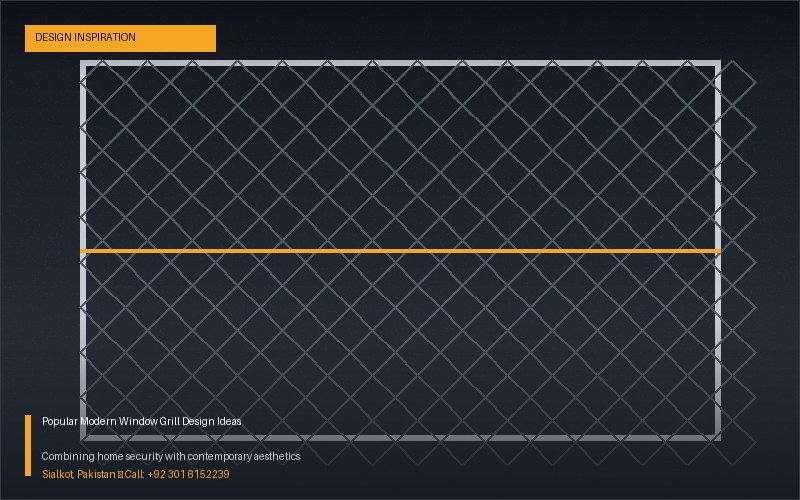
Popular Modern Window Grill Design Ideas
Gone are the days of heavy, prison-like floral grill patterns. Modern residential architecture in Pakistan embraces sleek horizontal lines, geometric diamonds, and concealed wall anchors...
Current Architectural Trends:
Horizontal Bar Layouts: Parallel 1/2-inch or 5/8-inch solid square bars spaced 4 inches apart create a wider visual look while ensuring no adult or child can squeeze through.
Recessed Window Reveal Mount: Mounting grills inside the window reveal rather than protruding onto the exterior plaster preserves clean modern building facades.
Integrated Emergency Escape Hatch: For upper floors, including a padlocked or deadbolted interior swing section ensures a critical fire escape route.
Maintenance & Care
•
5 min read
How to Maintain Steel Gates and Railings
Punjab's humid monsoon seasons and temperature swings can attack unprotected ironwork. Simple annual maintenance steps prevent corrosion, paint peeling, and hinge squeaks...
Preventive Care Checklist:
1. Bi-Annual Greasing: Apply automotive heavy grease or WD-40 lithium spray to hinge grease nipples, gate drop rods, and lock cylinders every 6 months.
2. Immediate Touch-Ups: If a gate is scratched down to bare metal, immediately sand the spot with 120-grit paper, apply red oxide zinc primer, and repaint to stop rust from spreading beneath the paint film.
3. Bottom Clearance Inspection: Clear dirt, debris, and fallen leaves from sliding gate tracks so rainwater drains freely rather than pooling around steel wheels.
Engineering Quality
•
7 min read
Why Welding Quality Matters in Metal Fabrication
A weld should be as strong or stronger than the parent metal itself. Understanding weld penetration, undercut avoidance, and slag inclusions when evaluating metalwork...
Signs of a Professional Weld:
Root Penetration: A weld bead that sits loosely on the surface (cold lap) will crack under shock load. Professional welders ensure proper amperage to fuse both pieces into a single continuous metallurgical bond.
Uniform Ripples: Quality welding exhibits even bead spacing with no porosity (pinholes), undercut along the toe, or trapped slag pockets.
Post-Weld Finishing: On architectural gates and handrails, visible joints must be carefully ground smooth without gouging the adjacent steel.
Material Selection
•
5 min read
Choosing Materials for Outdoor Metalwork
Evaluating Mild Steel (MS), Galvanized Iron (GI), Stainless Steel Grade 304, and Architectural Aluminium for open balconies, perimeter walls, and outdoor shed purlins...
Recommended Material Matches:
Rooftop Sheds & Car Porches: Galvanized iron (GI) pipes combined with primer-coated mild steel angle trusses offer optimal cost-to-lifespan ratios.
Terrace & Balcony Railings: Grade 304 Stainless steel or powder-coated aluminium avoid the rust stains that frequently streak painted plaster during monsoon rain.
Boundary Wall Security Spikes: Heavy solid mild steel bars welded directly onto structural channel bases deliver the toughest deterrent against physical intrusion.